

Barbara Hepworth-Inspired Floral Design at the Royal Cheshire Show

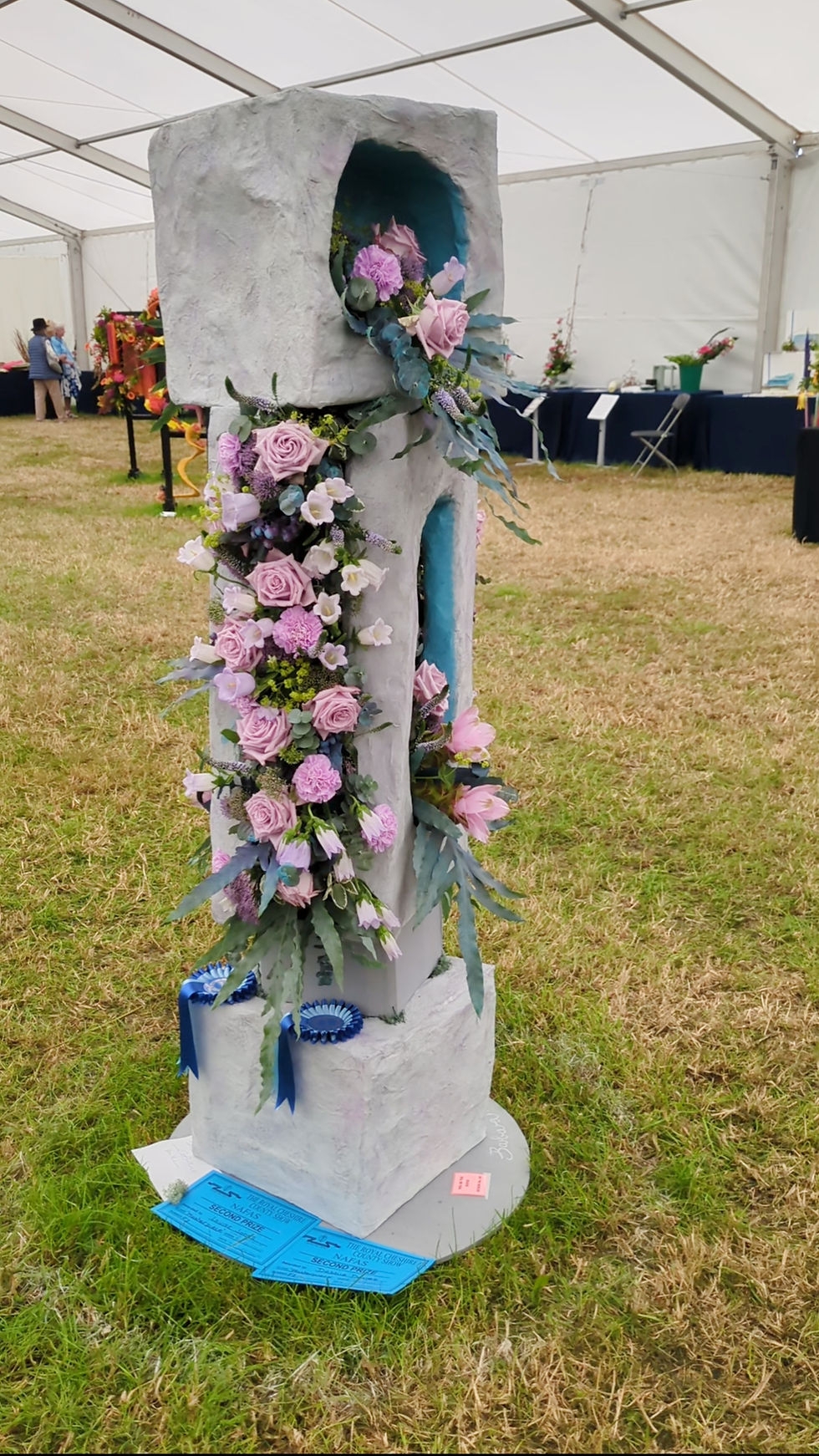
Floral Design Inspired by Stone, Space and Sculpture
One of the highlights of this year’s Royal Cheshire Show was taking part in the floral art Masterclass, where exhibitors were challenged to interpret an artist and their work through innovative floral design.
As passionate floral designers with a love of sculpture, our choice was immediate. Barbara Hepworth’s abstract forms have inspired us for many years. Her work is known for its organic shapes, pierced openings, textured surfaces and striking use of colour—qualities that offered endless inspiration for contemporary floral design.
This project gave us the opportunity to combine sculpture, flower arranging and creative floral mechanics into a unique exhibit that celebrated both art forms.
Finding Inspiration for a Contemporary Floral Design
As we studied Hepworth’s sculptures, several themes emerged that would shape our floral design:
The relationship between solid form and empty space
Openings carved through stone
Layered and stacked structures
Rich textural surfaces
Soft stone greys contrasted with vibrant turquoise interiors
These design principles are often explored in our floral workshops, where we encourage participants to look beyond flowers and draw inspiration from architecture, sculpture and the natural world.

Building a Sculptural Floral Design
The mechanics became one of the most enjoyable aspects of creating this exhibit. Developing strong mechanics is a key skill we teach during our floral design workshops, and this project provided the perfect opportunity to experiment with structure, balance and form.
Step 1 – Creating the Wire Framework
Each cube was formed from copper mesh, with the circular openings cut and shaped before assembly. This provided the basic structure from which the sculpture could develop.

Step 2 – Covering with Papier-Mâché
The wire structures were covered with layers of torn newspaper applied using a simple flour-and-water paste, creating a papier mache effect. The overlapping newspaper created a naturally textured surface that later helped achieve the appearance of weathered stone.
Rather than using PVA glue, we chose a simple flour-and-water paste. Not only is it a more sustainable option, but previous projects had shown it creates a surprisingly strong and rigid finish once dry.
Each form was built and refined individually before moving on to the painting stage.

Step 3 – Creating the Stone Effect
The finished surfaces were painted in soft stone greys with subtle lilac undertones.
Natural stone is rarely a flat grey. It contains hidden variations and delicate shifts in colour, so we introduced gentle lilac stippling a relatively dry sponge using water based paint to create depth and visual interest while also harmonising with the flowers that would later be added.
The turquoise interiors became one of the defining features of the design, echoing Hepworth’s use of colour and creating moments of surprise when viewed through the openings.

A Happy Design Discovery
As is often the case with creative projects, one of the most successful elements came about by accident.
Originally, one of the vertical structures was designed as a single narrow form. As construction progressed, it felt slightly unresolved, so we decided to divide it into two sections.
That simple change transformed the entire design.
The separation created a natural pathway through the sculpture, suggesting movement and allowing the flowers to travel through the forms themselves. Suddenly, the piece felt more connected, dynamic and alive, with flowers emerging from and weaving between the sculptural elements.
Engineering the Floral Mechanics
Because the structures were lightweight, stability was a key consideration.
Before applying the papier-mâché, paper-covered wire was attached directly to the mesh and secured beneath the forms. This allowed the completed structures to be firmly fixed to the supporting metal framework.
We also needed to create secure locations for the floral placements. Since the interiors of the boxes were hollow, additional wire supports were installed to form internal platforms. These provided stable bases for the floral material and prevented arrangements from disappearing into the structures.
From Floral Workshops to Competition Design
Many of the techniques used in this award-winning exhibit are the same principles we explore in our floral workshops. Whether creating competition pieces, large-scale installations or everyday arrangements, understanding mechanics, colour harmony and design structure helps bring creative ideas to life.
We love sharing these skills through our workshops, encouraging others to develop confidence in floral design while exploring new sources of inspiration.

Choosing the Flowers
The floral palette was inspired directly by the sculpture itself.
Soft lilacs, mauves and purples complemented the stone-like surfaces while maintaining a contemporary feel.
Our chosen materials included:
Ocean Song roses
Lilac carnations
Purple achillea
Pink campanula
Alchemilla mollis
Baby Blue eucalyptus
Phlebodium leaves
Hypericum berries
One challenge was ensuring the vibrant turquoise interiors felt connected to the floral design.
To achieve this, we introduced touches of turquoise throughout the arrangement. Hypericum berries were carefully painted, and colour was added to selected eucalyptus and phlebodium foliage. These subtle accents carried the colour story through the entire exhibit and visually linked the flowers with the sculptural forms.
Contrasts and Connections
One of the aspects we enjoyed most was the interplay between contrasting elements.
The solid, stone-inspired forms were softened by delicate flowers. The sculptural qualities of the curcuma echoed Hepworth’s architectural shapes, while the frothy lime-green Alchemilla mollis introduced movement and lightness.
The flowers appeared to grow through the sculpture, creating a conversation between nature and form—an idea that felt particularly fitting given Hepworth’s deep connection to landscape and the natural world.

The Finished Exhibit
By the time the final flowers were placed, the design had become exactly what we had hoped for: a floral interpretation rather than a literal copy.
The turquoise openings invited the eye to travel through the structure, while the flowers connected each element and softened the geometry. Together, they captured the qualities that had inspired us from the beginning—form, texture, colour, space and sculptural presence.

Delighted with Second Prize
We were thrilled to be awarded Second Prize in the Masterclass class at the Royal Cheshire Show.
The project involved many hours of planning, construction and problem-solving, but every stage was rewarding. From the first sketches inspired by Barbara Hepworth’s sculptures to the final placement of flowers, the exhibit challenged us creatively and allowed us to combine our love of sculpture with our passion for floral design.
Perhaps the most valuable lesson was that great designs often evolve during the making process. This one certainly did.
We hope Barbara Hepworth would have appreciated our floral tribute to her remarkable work. 🌿💙🌸


Comments